A Better Way to Track Borrowed Equipment
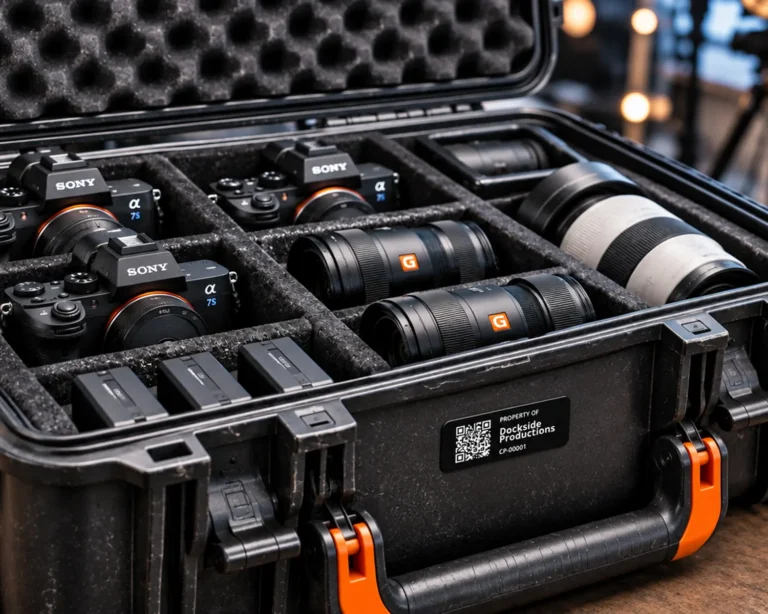
For years, we managed our production equipment using an Excel spreadsheet. It contained a list of our cameras, lenses, microphones, lighting, and other gear, along with some basic information about each item.
The problem was that we weren’t particularly good at keeping it updated. Usually, once or twice a year, I’d remember that I’d forgotten to maintain the spreadsheet and spend an afternoon going back through receipts, trying to figure out what we’d purchased since the last time I’d updated it.
But even when the spreadsheet was current, it only told us what we owned. It didn’t tell us where anything was or who had it.
And when you’re working with a team that regularly shares equipment, that’s a pretty important distinction.
Wait, Who Has That Camera?
Our production equipment moves around quite a bit. Someone might take a camera home after a shoot, borrow a microphone for a podcast, or bring a lighting kit to another location. Most of the time, that’s not a problem. We know our team, and we trust the people using our equipment.
But occasionally, we’d need something and realize we weren’t entirely sure where it was. We’d start asking around, trying to remember who used it last or whether someone had already brought it back.
We didn’t have a formal checkout process. We just relied on everyone remembering what they’d borrowed and returning it when they were finished.
As we started developing GearDock.io, this was one of the first things we wanted to address. We needed a way to see who had each piece of equipment, when they checked it out, and when we should expect it back.
What If Someone Needs It Next Month?
Once we started thinking about tracking equipment checkouts, another situation came to mind.
Let’s say we have a production scheduled six weeks from now. We know which cameras, lenses, microphones, and lights we’ll need, but those items might be used on several other projects between now and then.
We wanted a way to reserve equipment for an upcoming shoot without physically pulling it off the shelf weeks in advance.
That meant thinking beyond simply checking equipment in and out. We needed to know not only who had something today, but also whether it was already committed to someone else on a future date.
With GearDock.io, team members can request and reserve equipment for upcoming projects, helping everyone see what’s available and plan accordingly.
Does Everything Need Approval?
Another consideration was how much control we wanted over equipment checkouts.
For most of our gear, we didn’t see a reason to complicate things. If someone on the team needs a microphone or a light stand, they should be able to check it out without having to ask permission every time.
But some of our equipment represents a much larger investment. When someone wants to borrow an expensive camera or lens, we’d like to have a little more visibility into that decision.
So we built approval capabilities into the process, allowing us to require additional oversight when appropriate without making every equipment checkout unnecessarily complicated.
We also wanted each checkout to include an expected return date. That way, we could see everything currently checked out, who had it, and when it was supposed to come back, all in one place.
Getting Started Without Starting Over
Of course, we still had that Excel spreadsheet. It wasn’t perfect, but it represented years of equipment purchases and information we’d already collected.
We didn’t want to spend hours manually entering everything into a new system, so we built an import feature that allowed us to bring our existing inventory directly into GearDock.io.
That gave us a starting point. From there, we could add the additional information we wanted to track and begin managing our equipment in a way that went beyond simply maintaining a list of what we owned.
Knowing What You Have and Where It Is
Looking back, it’s interesting how much of our equipment management depended on memory. We knew what we owned, at least for the most part, and we generally knew who was using it. But there wasn’t a reliable place to go when we needed an answer.
Now, when someone needs equipment for an upcoming project, we can see what’s available, reserve what they’ll need, and keep track of it until it’s returned.
And perhaps just as importantly, we no longer have to wonder who has that camera.
If you’re managing equipment that’s shared among team members, you can explore GearDock.io to see how we’re approaching equipment checkouts, reservations, and inventory tracking.