You Know Your Gear. But Would Someone Else?
I’ve spent years working with cameras, lenses, audio equipment, and all the accessories that come with video production. I can pick up a lens and usually tell you exactly what it is, what it’s worth, and what makes it different from another lens that looks almost identical. But that’s because I’ve spent years working with this equipment.
Take a Sony 24-70mm G Master lens, for example. Sony makes two generations of that lens, and while there are differences between them, someone unfamiliar with camera equipment might have a difficult time telling them apart. The same goes for distinguishing a 16-35mm lens from a 24-70mm lens. To me, those differences are obvious. To someone else, they’re just expensive-looking camera lenses.
And that got me thinking about something I’d never really solved.
What If Someone Else Had to Figure It All Out?
Like a lot of people who have accumulated equipment over the years, I’ve invested a considerable amount of money in my gear. I’ve also thought about what would happen to all of it if something happened to me.
My wife knows I have a lot of camera equipment, but she doesn’t necessarily know the difference between one Sony lens and another. And why should she? That’s my area of expertise, not hers. The last thing I’d want is for her to have to learn all of those distinctions while dealing with everything else that comes with losing someone.
I kept thinking about how easily a $2,500 lens could end up being sold for $200, simply because she wouldn’t know what it was worth. If she ever needed to sell the equipment or liquidate the business, I wanted her to be able to get a fair value for what I’d spent years building. Especially during a time when she’d have far more important things on her mind than researching camera equipment. The last thing I’d want is for her to feel pressured to get rid of everything just to have one less thing to deal with.
A Spreadsheet Doesn’t Solve Everything
For years, I kept an Excel spreadsheet of our equipment. It wasn’t always up to date, but it included information about what we owned and what we’d paid for it. Even if I’d maintained that spreadsheet perfectly, though, there was still a problem.
Someone would have to pick up a piece of equipment, figure out exactly what it was, find the corresponding entry in the spreadsheet, and then make sense of the information. That’s easy enough when you know what you’re looking at. It’s an entirely different experience when you don’t.
I wanted something more simple. Something that wouldn’t require knowing model numbers, understanding product generations, or searching through hundreds of rows in a spreadsheet.
What If You Could Just Scan It?
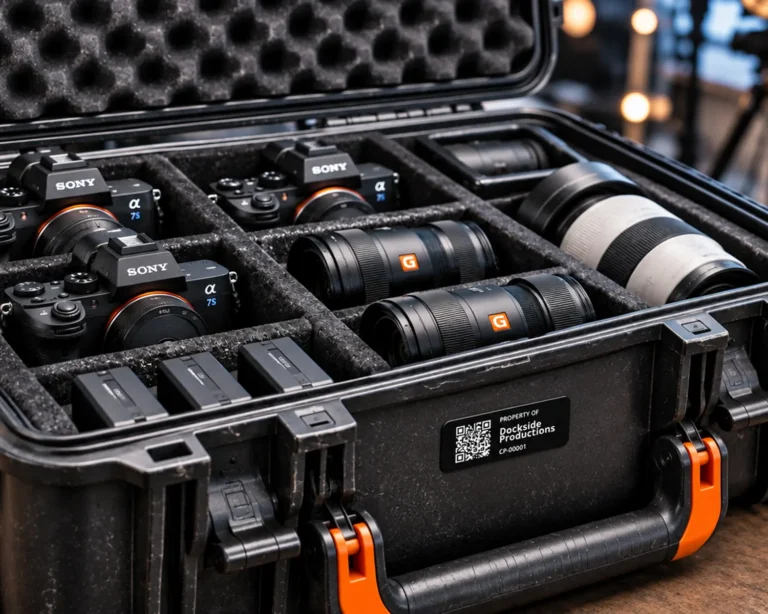
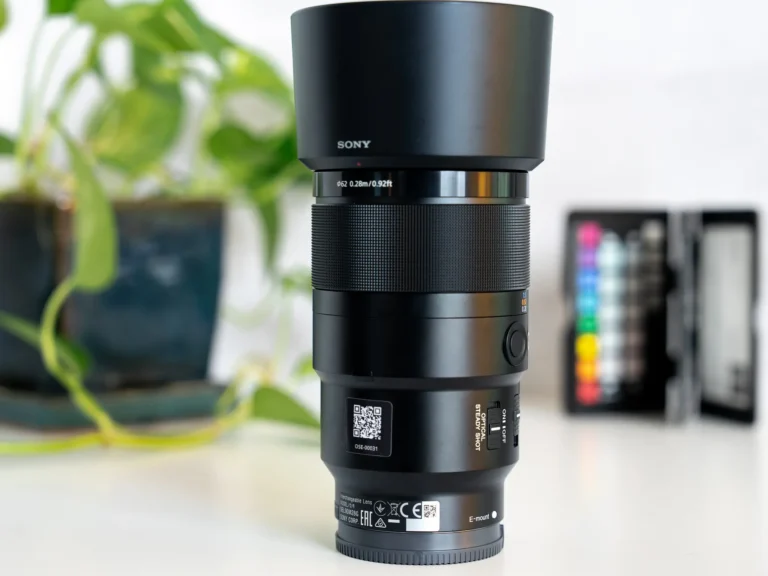
This became one of the main problems I wanted to solve when we started building GearDock.io. The idea was straightforward: What if every piece of equipment had a label that connected directly to its inventory record? Instead of trying to identify a lens by looking at it, someone could simply scan the label with their phone and pull up the exact item.
We explored several ways to make that connection, including RFID, NFC tags, and other labeling options. Ultimately, we chose QR codes because they were inexpensive, easy to use, and didn’t require specialized equipment. We also wanted people to be able to create their own labels without needing graphic design software or technical expertise.
With GearDock.io, you can print QR code labels at home or in your office. If you’d rather have them professionally produced, you can download a print-ready file with contour-cut lines and instructions for your printer. You don’t need to know Adobe Illustrator or prepare the artwork yourself. The important part is that the label stays with the equipment, making it easy to identify the exact item whenever someone needs to.
The Information Is There When You Need It
Once you’ve identified the item, GearDock.io gives authorized users access to its inventory record, including details like the manufacturer, model, serial number, purchase price, and replacement value.
That information is useful for insurance documentation, inventory management, and plenty of everyday situations. But for me, one of its most important purposes is making sure someone else could understand what they’re looking at without needing my experience.
There are privacy considerations, of course. Scanning a QR code doesn’t mean just anyone can see your financial information. Someone who finds a lost item can see return information, while the more detailed inventory records remain available to authorized users.
Making Your Knowledge Useful to Someone Else
I’ve spent a lot of time thinking about equipment management, and most of the challenges are fairly practical. Knowing what you own, keeping track of where it is, and making sure it comes back when someone borrows it.
But this particular challenge was different. I wanted to know that if someone else ever had to make sense of all the equipment I’ve accumulated, they wouldn’t have to start from scratch. They could pick up a lens, scan a label, and know exactly what they were holding.
That’s a pretty simple idea, but it was one of the biggest reasons we built GearDock.io.