Equipment Management Doesn’t Have to Be Complicated
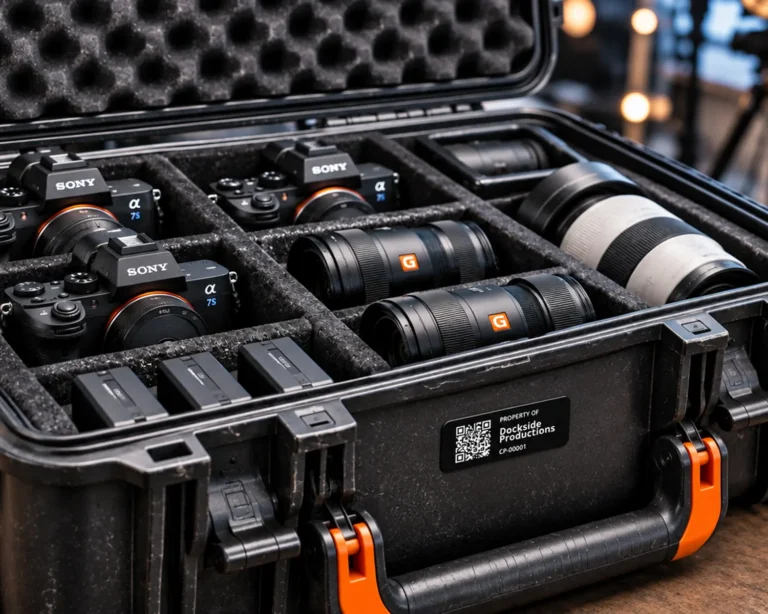
When we started building GearDock.io, we weren’t trying to create the next enterprise asset management platform. We weren’t studying what large hospitals, universities, or corporations needed from their inventory systems. We were running a small video production company and trying to solve some pretty ordinary problems with our equipment.
We needed a better way to keep track of what we owned, who had it, and when it was supposed to come back. We wanted to organize equipment that regularly traveled together, keep records of what we’d paid for everything, and make it easier to identify individual items without having to know every model number by heart. None of those challenges seemed particularly unusual, but we hadn’t found a solution that felt like it was built specifically for the way we worked.
Different Equipment, Similar Problems
As we started thinking about who else might benefit from GearDock.io, we realized that our challenges weren’t necessarily unique to video production.
Consider a church with a volunteer production team. They might have cameras, microphones, wireless transmitters, lighting equipment, and other gear that gets used throughout the week. Some of it stays in the building, while other equipment might travel to events or be borrowed by volunteers. Someone needs to know what they own, where everything belongs, and who has it when something goes missing.
A band faces a similar challenge, although the equipment looks different. Instead of camera bodies and lenses, they’re managing instruments, amplifiers, microphones, speakers, and cables. Some of that equipment might live in a trailer, while other items travel separately with individual band members. Knowing what’s supposed to be in that trailer and what it’s all worth can be pretty important.
The same thinking applies to a small business managing laptops, monitors, tablets, and other technology. The equipment may not leave the office for a production shoot, but it still gets assigned to people, moved between locations, and eventually replaced. And when someone leaves the company, it’s helpful to know exactly which items need to be returned.
These aren’t identical businesses, and they don’t necessarily need identical workflows. But they share a fairly simple need: keeping track of valuable equipment without making it a full-time job.
Simple on Purpose
I’ve spent more than 25 years working in digital product management, functional architecture, and user experience design. One thing I’ve learned is that adding features is usually easier than deciding which ones you don’t need.
It’s tempting when building software to keep expanding its capabilities. Every new use case introduces another possibility, and before long, something that started as a straightforward solution becomes a much more complicated product.
We don’t want that for GearDock.io. Our goal isn’t to accommodate every possible equipment management scenario or compete with enterprise platforms that serve organizations with thousands of employees and complex operational requirements.
We want to build something that’s approachable for a photographer working independently, a production company with a handful of employees, or the person responsible for audiovisual equipment at a church. Those people have plenty of other responsibilities, and managing equipment shouldn’t consume more time than necessary.
That’s influenced quite a few of our decisions, including how we organize products and individual items, how we handle checkouts and reservations, and how we create equipment labels.
You Shouldn’t Need Specialized Equipment to Get Started
One example of that thinking is our approach to equipment labeling.
We wanted people to be able to identify their gear with a smartphone, without purchasing specialized scanners or expensive labeling systems. After exploring several options, we decided to start with QR codes because they’re familiar, inexpensive, and easy to produce.
GearDock.io allows you to generate labels for your equipment and print them yourself using adhesive-backed paper. If you’d rather have professionally printed labels, you can download a print-ready file that includes contour-cut lines and instructions for the printer. You don’t need design software or experience preparing artwork for production.
We also built an Excel import feature because we knew plenty of people, including us, already had equipment lists in spreadsheets. Rather than asking them to start over, we wanted to make it easier to bring that information into GearDock.io and build from there.
These may seem like relatively small decisions, but they reflect how we think about the product. The less work someone has to do just to get started, the more likely they are to actually use it.
Building Something We Enjoy Using
One of the advantages of building GearDock.io to solve our own problems is that we get to experience the product the same way our customers do. When something feels unnecessarily complicated, we notice. When a workflow takes more steps than it should, we have a reason to improve it.
We also think there’s room for software that feels enjoyable to use. Equipment management may not sound particularly exciting, but there’s something satisfying about having your gear organized, knowing where everything is, and being able to find the information you need without digging through spreadsheets or asking around.
We’re not trying to build a solution for everyone. GearDock.io is intended for independent creators, small businesses, and teams that manage valuable equipment and want a practical way to keep it organized.
If we can help those people spend less time worrying about their gear and more time doing the work they enjoy, we’ll have built exactly what we set out to create.