Why We Built GearDock.io After Kit.co Shut Down
For years, we used Kit.co to organize and share the camera equipment, lenses, audio gear, and other tools we use in our production business. It was simple, visual, and did exactly what we needed at the time. We even had a link on our website that took visitors directly to our Kit.co page, where they could browse the gear we used.
When Kit.co shut down in March 2026, we needed to find another solution. There were certainly other ways to create a list of our equipment, but we started wondering whether this might be an opportunity to build something that better suited our needs.
We’d been using Kit.co primarily as a way to showcase our gear, but there were other challenges we’d been dealing with that it wasn’t designed to solve. So rather than immediately looking for a replacement, we started thinking through what we’d want if we could build our own system from the ground up.
What Did We Actually Need?
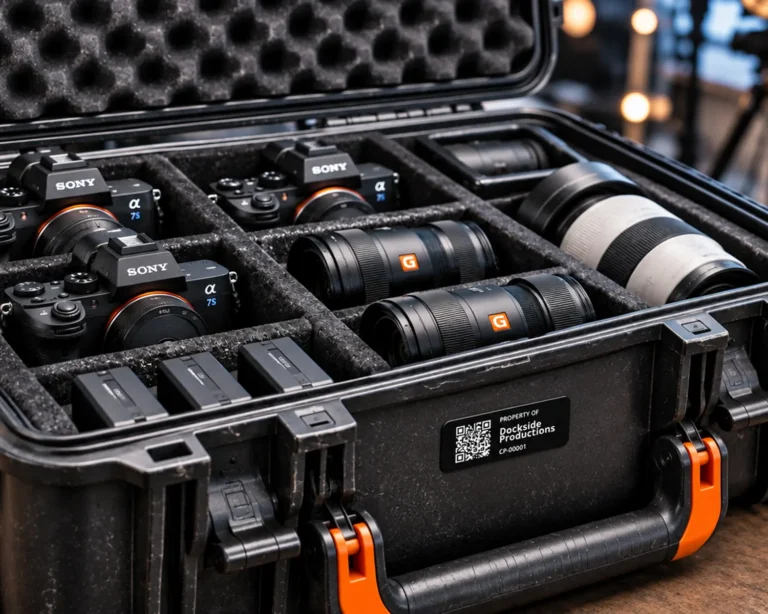
We started by identifying three challenges we wanted to solve. The first was relatively straightforward. We needed a central place to manage all of our equipment, complete with product images, descriptions, and the ability to share that information with others.
But we also wanted to track more than just the products themselves. Over the years, we’d accumulated a considerable amount of production equipment, and we needed a better way to document what we owned and what it was worth. That meant tracking serial numbers, purchase prices, and replacement values, along with the ability to generate reports for insurance purposes.
A spreadsheet could accomplish some of that, but we saw an opportunity to rethink the entire experience. Rather than replicate what we’d used before, we started asking what the ideal gear management experience would look like if we were designing it from scratch. And that’s what we set out to build.
Who Has My Gear?
The second challenge was something we’d encountered regularly while working with our production team. Equipment has a tendency to move around. A camera goes home with someone after a shoot, a microphone gets borrowed for a podcast, or someone takes a light kit to another location. Before long, you’re asking around trying to figure out who has what.
We wanted a way to check equipment out to team members, know who had it, and see when it was expected back. We didn’t need a complicated rental management system, just something that made it easier to keep track of our equipment as it moved between people and locations.
The $2,500 Lens Problem
The third challenge was a little more personal, and admittedly a bit morbid.
I’ve spent years buying and using production equipment. I know what most of it is, what I paid for it, and roughly what it would cost to replace. My wife, on the other hand, doesn’t have that same familiarity with the equipment, nor should she be expected to.
But I’ve wondered what would happen if something happened to me. What if she needed to sell my equipment, make an insurance claim, or simply figure out what was sitting on the shelves in my office? The last thing I’d want is for her to sell a $2,500 lens for $200 because she had no idea what it was.
That got us thinking about QR codes. What if we could put a small label on every piece of equipment so that someone could simply scan it with their phone and pull up its information? If they were logged into GearDock.io with the appropriate permissions, they could see exactly what it was, what we’d paid for it, and what it would cost to replace it with a new one. But if someone found a piece of our equipment that had been lost or left behind, scanning that same code would bring up a public page with instructions on how to return it. One QR code, two different experiences depending on who’s scanning it.
Putting It All Together
As we worked through these challenges, we started to see how the different pieces could fit together. We could create a visual inventory designed around the way we actually manage our gear, with individual equipment records that included serial numbers, purchase prices, and replacement values. We could track equipment as it moved between team members, and QR code labels could connect the physical items back to their records.
We also wanted to retain the ability to share our equipment catalog with others, since that was one of the main reasons we’d used Kit.co in the first place.
The result was GearDock.io.
It isn’t a feature-for-feature recreation of Kit.co, nor was that our intention. Kit.co’s shutdown prompted us to reconsider how we managed our equipment, but rather than use its design or features as a blueprint, we approached the experience from scratch. We considered the problems we’d encountered, how we’d ideally want to interact with our inventory, and what would make managing our gear easier.
Where We Go From Here
With a background in video production and more than 25 years of experience in digital product management, functional architecture, and UI/UX design, building GearDock.io brought together two areas I’ve spent much of my career working in. We started by solving problems we’d encountered managing our own production equipment, but many of those same challenges apply to photographers, podcasters, content creators, and anyone else who owns and manages valuable gear.
We’re continuing to develop the platform as we use it in our own business and hear from others about how they manage their equipment. There are plenty of ideas we’d like to explore, but our focus remains on making it easier to know what you own, what it’s worth, and where it is.
If you used Kit.co and have been looking for an alternative, or you’re simply trying to get a better handle on your equipment, we’d love for you to take a look at GearDock.io.